
Theory of changeAugust 2026
From first talk to published research
India had foreign courses and a scattered community. Nothing connected them. We built the pipeline.
The problem
Foreign courses do introductions well. People in India take them. Then nothing.
What was missing, and what it costs
You finish a course. You know what alignment is. But there is no group to join, no project to work on, nobody to ask which fellowship fits you or how to write the application. The interest fades.
- Cohort programme
- University group
- Research programme
- Career support
- Events
- People who could do this work do something else.
- One of the largest pools of AI engineers contributes almost nothing to making these systems safe.
- Systems deployed on a billion people get tested by nobody who lives here.
Three areas
People enter through one and end up caring about all three.
- Area 1
Technical AI Safety
Can we build systems smarter than us that stay under human control?
- Area 2
Governance
Can institutions move fast enough, and can they agree?
- Area 3
AI Ethics and Society
Who is harmed by systems already deployed, especially in India?
Based in India. Open globally.
Cohort 1 had people from nine countries across four continents.

- India
- United States
- United Kingdom
- Germany
- Nigeria
- Uganda
- Kenya
- Singapore
- Taiwan
Why mixed cohorts
A closed Indian cohort goes stale. Mixed cohorts bring different regulatory contexts, different deployment problems, better arguments. Our groups, events, research and policy work are in India.
The pathway, at true scale
Our 2026 targets. Each step costs more per person and goes deeper.
- One dot is 10 people
- Upper end of a range
- One square is a research group
- 1Speaker sessionsExplore1,000
- 2Reading and mechanistic interpretability groupsExplore50
- 3Technical AI Safety and AI Governance cohortsLearn60 to 80
- 4Research working groupsResearch5 groups
- 5Research programmeResearchNot open yet2027
| Step | Stage | 2026 target |
|---|---|---|
| Speaker sessions | Explore | 1,000 people |
| Reading and mechanistic interpretability groups | Explore | 50 participants |
| Technical AI Safety and AI Governance cohorts | Learn | 60 to 80 participants |
| Research working groups | Research | 5 groups |
| Research programme | Research | Starting 2027 |
A cohort ends. A group does not.
AI Safety NITA, the Delhi AI Alignment and Safety Collective, and AI Safety India Bengaluru.
Highest value per hour of anything we do.
Where to apply, how to write it, who to talk to.
The numbers, 2025 against 2026
| Stage | 2025 | 2026 target |
|---|---|---|
| Reached | ~300 | 1,000 |
| Speaker sessions | 2 | 10 to 20 |
| Reading group participants | 15 | 50 |
| Trained in cohorts | 30+ | 60 to 80 |
| Research working groups | 1 | 5 |
| Active local groups | 3 | 6 |
| 1:1 career advising sessions | ~50 | 100 |
| In AI safety research or job roles | 15+ | 30 to 40 |
| Blogs | 3 | 30 |
| Papers | 0 | 2 |
| White papers | 0 | 2 |
People in AI safety research or job roles. It went from zero to 15+ in 2025. The 2026 target of 30 to 40 holds that same 50 percent conversion rate at double the intake.
A person counts if they hold a role, fellowship or facilitator position at a safety organisation, or have published safety work. Taking a course, reading, or intending to switch does not count.
Names withheld until participants consent.
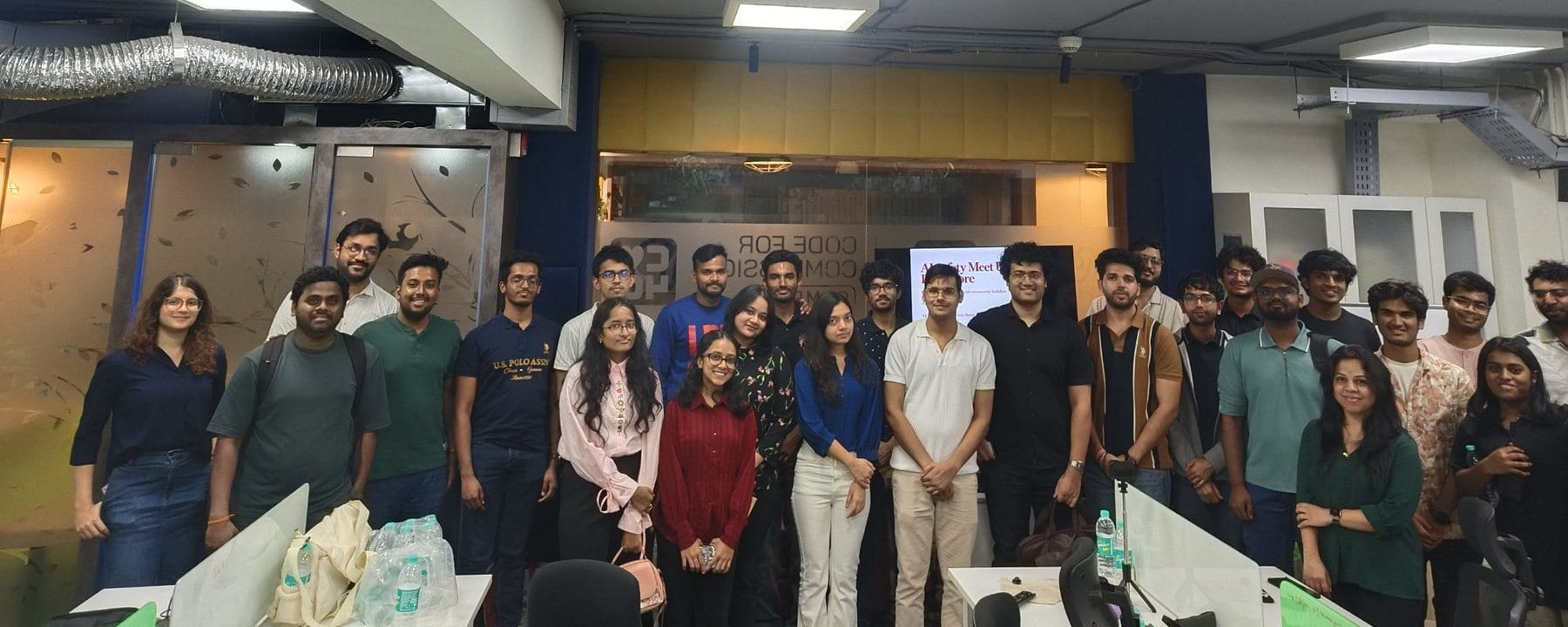
The people are already here. What was missing is the path.
Where Cohort 1 went
30+ trained. 15+ placed in AI safety roles within 12 months.
Research programmes
- SPAR Research
- AI Safety Camp
- Sentient Futures
- Cooperative AI
Roles
- MLCommons
- SteadRise, technical operations
- JAIST Japan, Co-creative Intelligence
- Women For Ethical AI South Asia, UNESCO
Facilitation
- Centre for Effective Altruism
- BlueDot Impact
- Sentient Futures
What we produce
- People
Graduates who move directly into safety work
Some return as facilitators.
- Work
Model testing, white papers and blogs
Safety behaviour in Indian languages and deployments.
What has to be true
If one assumption breaks, the model breaks.
The field can absorb the people we train
The biggest risk. Safety hiring is narrow and demands deep knowledge.
How we test it: Under 10% of a cohort placed within 12 months.
Enough people are interested and stuck
Cohort 1 filled. If later cohorts need colder audiences, conversion drops.
How we test it: Prior exposure below half of accepted applicants.
People move up, not sideways
If reading groups fill but nobody applies to cohorts, this is a pile of activities pretending to be a pipeline.
How we test it: Step-to-step progression rate, from Cohort 2.
Groups survive their founders
Organizers graduate.
How we test it: Does each group survive one full handover?
What would make us stop
- Fewer than 5 of 50 people from a cohort do anything in AI safety within 12 months.
- Cohorts drift into generic AI ethics because we cannot fill them with people who care.
What we are not doing
- Not a research lab. Research runs through working groups, not a separate team.
- Not commercial audits. A separate entity, if ever.